Key points
- Since June 2019, the federal test measures portable dehumidifiers at 65°F, the air of a basement, so federal pint ratings read lower than older ones.
- Brand figures come from hot, wet test air (90°F or 95°F at 90% humidity) and run two to three times higher.
- Compare units on the federal figure: every certified dehumidifier is measured that way.
- Size by how damp the space is as well as how big it is.
- Below 65°F, frost can form on the coils of a dehumidifier.
Two pint figures for one machine
Capacity is the amount of water a dehumidifier removes in 24 hours, in pints. How much it removes depends on the air around it: warm, wet air gives up water easily, cool air gives up much less. So the number on a box depends on the test behind it.
ENERGY STAR explains the change on its testing page. Department of Energy standards that took effect in June 2019 test portable dehumidifiers at 65°F instead of 80°F, to reflect how the units actually run in a basement. A dehumidifier tested the new way reports a smaller capacity, because there is less water to remove in cooler air. The program's rough conversion for portable units maps an old 30-pint rating to about 20 pints, 50 to about 30, 70 to 40 or 45 and 90 to about 55.
Brand figures are measured in hotter, wetter air still. Shinco rates its units at 90°F and 90% relative humidity, or 95°F and 90%, and prints that condition with the number. The table below sets both figures side by side for every Shinco dehumidifier.
| Unit | Brand test | Federal test | Area |
|---|---|---|---|
| SDL-30P Compact Dehumidifier | 30 pints (90°F, 90% RH) | 12 pints | Up to 1,500 sq ft |
| SDO-80P 86-Pint Dehumidifier | 86 pints (90°F, 90% RH) | Not in the records | Up to 5,000 sq ft |
| SDX1-86P 86-Pint Dehumidifier | 86 pints (90°F, 90% RH) | Not in the records | Up to 5,000 sq ft |
| SDZ1-80P Wi-Fi Dehumidifier | 80 pints (95°F, 90% RH) | 24 pints | Up to 5,000 sq ft |
| SDZ1-120P Wi-Fi Dehumidifier | 120 pints (95°F, 90% RH) | 35 pints | Up to 6,000 sq ft |
| SDZ1-150P Dehumidifier with Pump | 150 pints (95°F, 90% RH) | 50 pints | Up to 7,000 sq ft |
| SGH-200P Commercial Dehumidifier | 200 pints (90°F, 90% RH) | Not in the records | Up to 8,000 sq ft |
Four Shinco units appear in the ENERGY STAR certified records: the SDL-30P at 12 pints a day, the SDZ1-80P at 24, the SDZ1-120P at 35 and the SDZ1-150P at 50. The SDL-30P record also carries the Most Efficient mark. The 86-pint units and the commercial SGH-200P are not in the records, so for those only the brand figure exists.
Reading the numbers on a Shinco unit
Each Shinco dehumidifier page prints both figures in one line, the brand figure first and the federal one second. The SDZ1-80P reads 80 pints at 95°F and 90% humidity and 24 by the DOE test. The SDZ1-120P reads 120 and 35, the SDZ1-150P reads 150 and 50, and the compact SDL-30P reads 30 at 90°F and 12 by the DOE test. When you set two of these units side by side, set them by the second number, because it was measured the same way for every certified model.
The test air differs inside the range too. The SDZ1 series is rated at 95°F, while the SDO-80P, the SDX1-86P and the SGH-200P are rated at 90°F, so a brand figure alone does not line two of them up. Where a unit has no federal figure, compare it by the area it is rated for: up to 5,000 square feet for the 86-pint units and up to 8,000 for the SGH-200P.
The DOE test air, 65°F, stands for a basement, which is where most of these units run. A figure measured at 95°F describes a hot, wet summer day instead. On each unit page the specification table lists both figures under Water removal, next to the area, the bucket and the drain.
Size by how damp the space is
The size of the room is only half of the question. ENERGY STAR sizes a portable dehumidifier by the condition of the space as well, and its chart is worth reading before you choose. The pint figures in it are federal figures.
| Condition without a dehumidifier | Room under 2,000 sq ft | Room over 2,000 sq ft |
|---|---|---|
| Slightly to moderately damp: feels damp, musty odor now and then (50 to 75% humidity) | 20 to 30 | 30 or more |
| Very damp: smells and feels damp all the time, damp spots on walls and floors (75 to 90%) | 25 to 40 | 40 or more |
| Wet: walls or floor sweat, seepage, laundry drying (90 to 100%) | 30 to 50 | 50 or more |
Read your space against the left column, then find a unit whose federal figure lands in the range. A musty basement room of 1,200 square feet calls for 20 to 30 pints, so the SDZ1-80P at 24 fits it. A whole basement that sweats in August calls for 50 or more, which is the SDZ1-150P at 50. ENERGY STAR adds that it is better to oversize than undersize a dehumidifier, the reverse of the advice for air conditioners.
What the energy label tells you
ENERGY STAR says a certified dehumidifier removes the same amount of moisture as a similar conventional unit with 20 percent less energy. The efficiency figure behind that is the integrated energy factor, in liters of water removed per kilowatt-hour, and a higher figure means a more efficient unit.
The certified records print it for each model. The SDZ1-120P, for example, is listed at an integrated energy factor of 2.0 liters per kWh and 340 kWh a year. A dehumidifier in a damp basement can run most of the summer, so that yearly figure is the one to weigh against the price.
Bucket, hose or pump
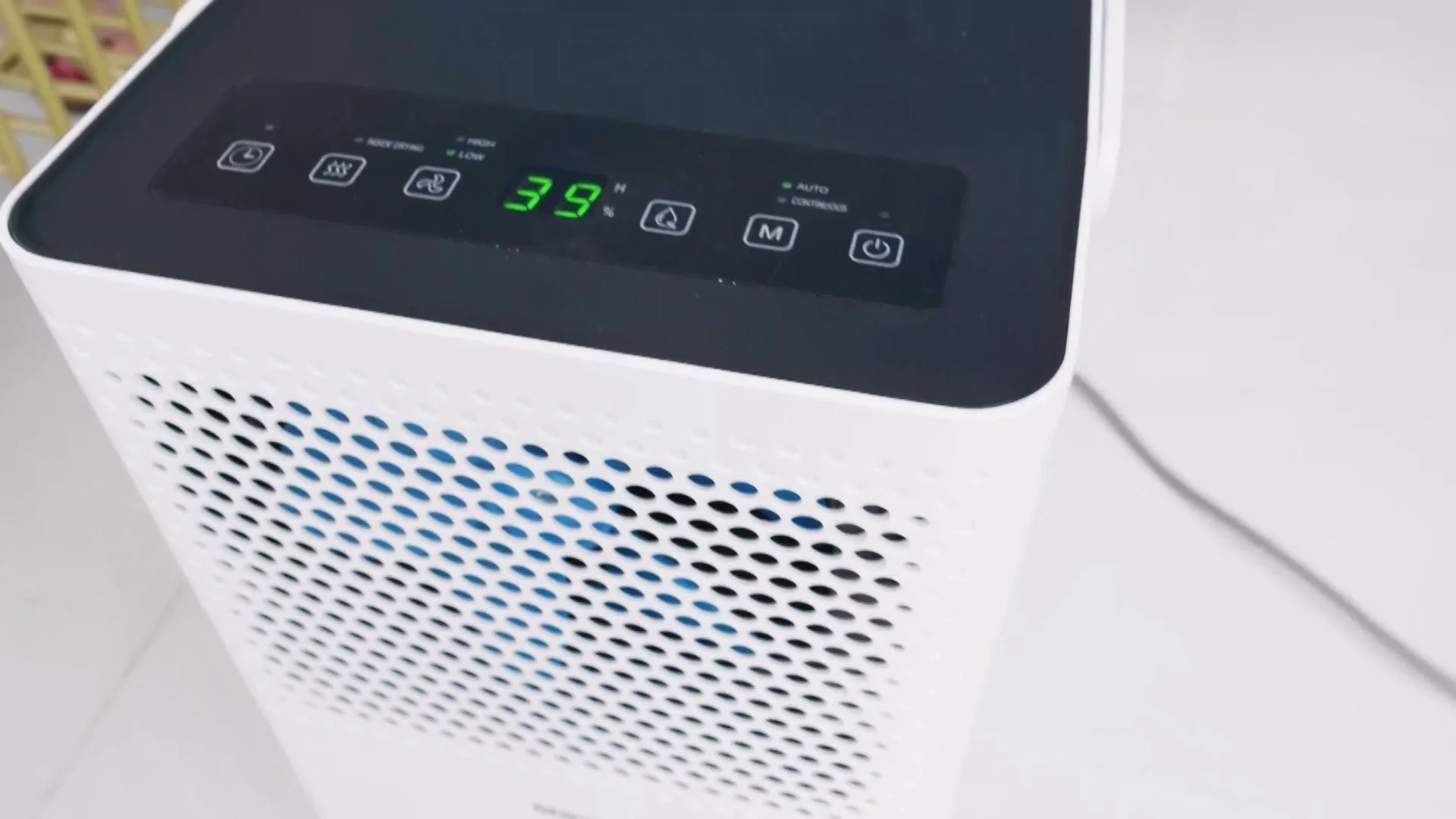
Most portable dehumidifiers collect water in a bucket and switch off when it is full. ENERGY STAR notes that many also take a hose, which you lead to a floor drain or a sump so you never empty the bucket at all. In a basement that is the setup to aim for: a 1.32-gallon bucket fills fast when the unit removes dozens of pints a day.
Every Shinco home dehumidifier takes a hose. The SDZ1-150P and the commercial SGH-200P go one step further with a built-in pump, which pushes water up to a laundry sink or out of a window when the drain sits higher than the unit. Our basement dehumidifier page lists the drain options of each unit.
Cold basements and frost
ENERGY STAR warns that frost can form on the coils when the air drops below 65°F. A frosted coil stops removing water, and the compressor may cycle on and off without doing much. If your basement runs cooler than that, place the unit in its warmest corner, keep it off a cold slab if you can, and switch it off to thaw if you see ice. For crawl spaces and garages that stay cold, the SGH-200P has auto defrost and keeps working while it clears the ice.
Our guide to basement humidity covers the humidity level to set once the unit is running.
Every unit named here is part of the Shinco air-care line.